
No Pipestone County 72-Hour Release List
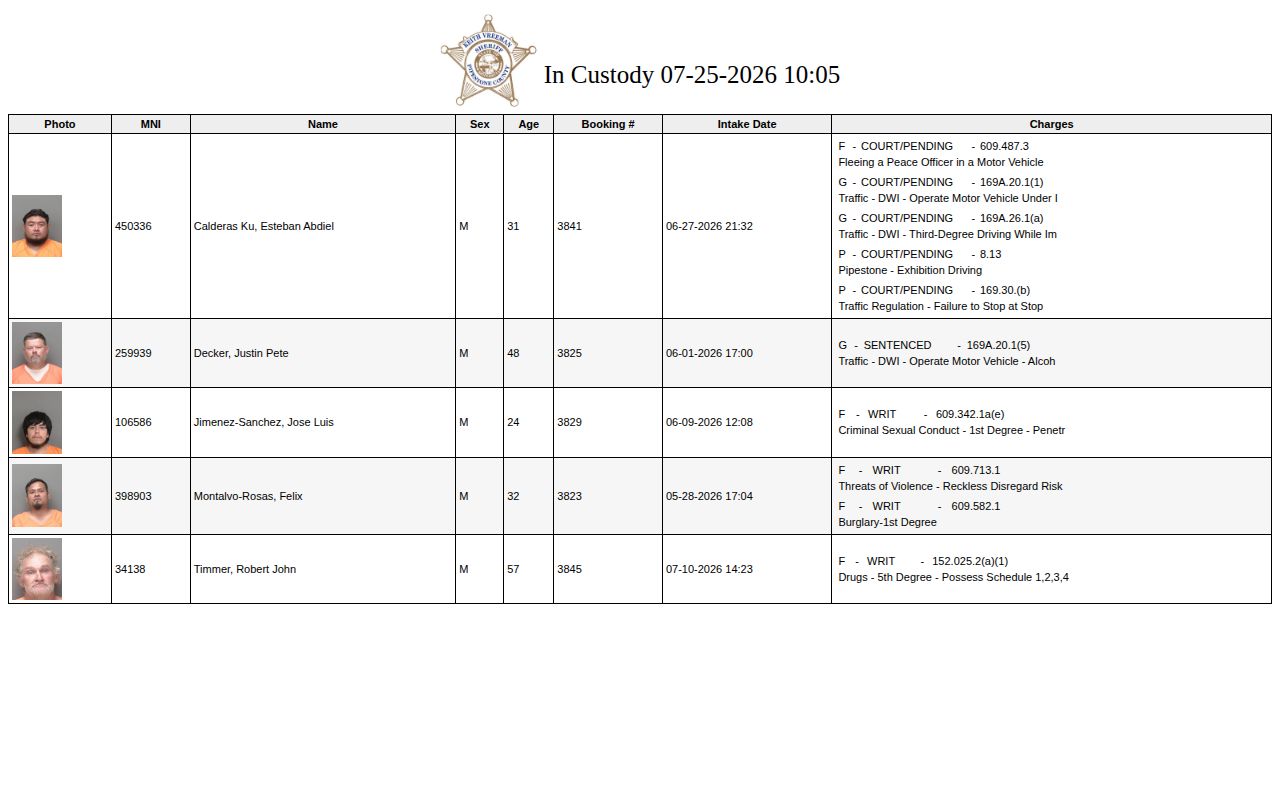
No official Pipestone County 72-hour released-inmate feed was found. The Sheriff’s public custody host has no three-day view, weekend archive, release-history tab, window control, or released-person search. Its “In Custody” report shows a timestamped current population only.
A three-day inquiry differs from watching today’s roster. It seeks an agency record for each event in the chosen period, including a legal basis and any receiving agency. This catches a transfer that would otherwise look like a release and preserves events that no longer appear in a current-only display.
Request Pipestone Releases Across Three Days
The strongest route is a focused public-data request under Minnesota Statutes section 13.82, subdivision 2. Give the Sheriff a precise range with local dates and times. Ask for all public release and custody-transfer events from the Pipestone County Jail in that range, then name the fields needed to interpret them. The official landing page is the verified starting point, but the research did not establish a fee, fixed response deadline, or universal submission method.
- Choose an exact start and end time that covers the full 72-hour period, including the weekend or holiday hours at issue.
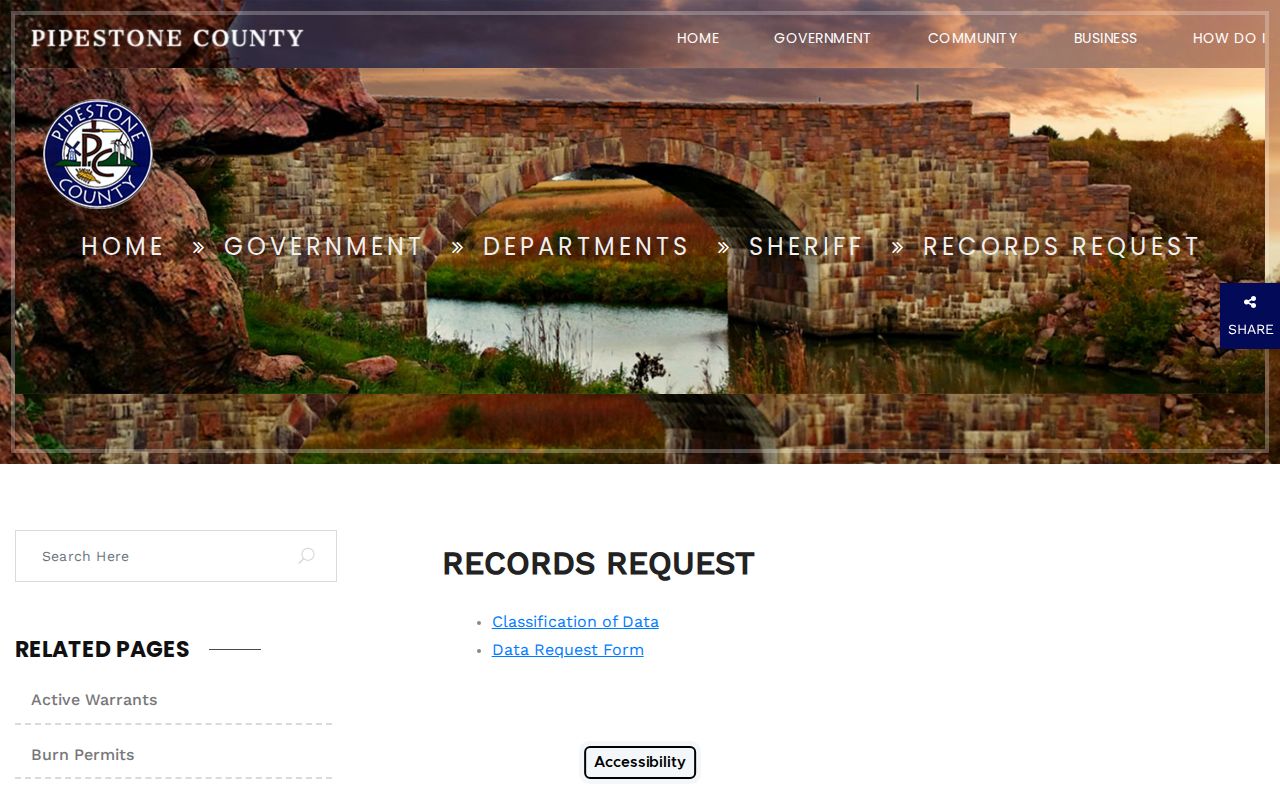
- Open the Sheriff’s official records-request page and confirm the current public-data procedure.
- Request the adult’s name, booking or incident identifier, release date and time, and legal basis for release.
- For every transfer, request its date, time, legal basis, and receiving agency.
- Compare the response with Minnesota VINE events and the public court Register of Actions.
Note: Define the range with clock times, since “last three days” may be read differently around midnight and agency business hours.
The Pipestone Sheriff request page is also the source captured below.
Contact the Sheriff’s Office at 507-825-1100 or use the courthouse address at 416 South Hiawatha Avenue, Pipestone, MN 56164 to verify routing before an in-person visit. Do not assume front-desk staff can instantly disclose every maintained record.
What Pipestone 72-Hour Release Records Show
A genuine three-day result should be built from release and transfer data, not from current-booking fields. The field set below can reveal who left county custody, when the change occurred, why it occurred, and whether legal control passed to a new agency.
| Requested field | Why it matters in a 72-hour window |
|---|---|
| Name and adult identifiers | Links each event to the correct person and avoids name-only confusion. |
| Booking, MNI, or incident number | Separates multiple stays or similarly named people. |
| Release date and time | Places the completed county event inside or outside the requested range. |
| Legal basis | Distinguishes bond, a court order, sentence completion, and other recorded grounds. |
| Transfer date and time | Shows that custody moved during the range instead of ending. |
| Receiving agency | Directs the next search to DOC, another county, or another custodian. |
The public roster has different fields: photograph, MNI, name, sex, age, booking number, intake date, and charge rows. It has no release date or release-reason field. Neither the intake date nor a charge status can be converted into a reliable release date.
Weekend Pipestone Release Records Need Catch-Up
A 72-hour span is useful when the person may have left on Friday night, over a weekend, or near a holiday and the inquiry begins later. It prevents a narrow calendar-day assumption from excluding a prior event. Yet the wider span does not create an official feed or prove that all source systems updated on the same schedule.
Minnesota VINE receives county-jail data and says routine jail updates normally arrive every 15 or 30 minutes. Transfer notifications are delayed eight hours, while death notifications are delayed twelve hours. A VINE alert can therefore fall later than the underlying event. The court order may also precede completed jail processing. Use the Sheriff’s release time as the county custody fact and the court record as the legal explanation.
If the question is only whether an event occurred today, the Released Last 24 Hours guide gives the sharper same-day verification sequence.
Pipestone Roster Retention Cannot Prove Release
The county publishes no verified refresh cadence or online retention period on the reviewed custody page. Its timestamp proves only that a report was generated at the displayed time. No archive allows a reader to step backward through the past 72 hours, and no pagination or window selector exposes people after they disappear.
A before-and-after screenshot can narrow when a display changed, but it cannot supply the legal basis. A removed name might reflect bond, completion, transfer, escape, death, record correction, purge, or a system change. Two missing entries, one from the roster and one from VINE, still do not create an affirmative release record.
The official Pipestone current-custody report is accurately shown in the image below.
Note: Save a report timestamp as context, then request the maintained event rather than presenting screenshot comparison as conclusive proof.
Confirm Pipestone County Three-Day Events
Minnesota VINE is the notification branch for county-jail data. Search one person by name or identification number and read each status word literally. General release, court-ordered release, bond release, transfer, unsupervised custody, record purge, escape, death, and other events have different meanings. VINE is not a permanent release archive, and a missing result does not prove release.
MCRO public access supplies a second line of evidence. Search by case number when possible, open the criminal Register of Actions, and inspect public bail, release, dismissal, judgment, sentencing, probation-discharge, and later orders. Pending nonconviction cases do not appear in remote defendant-name results, and remote documents from before July 2015 are limited. The Fifth Judicial District courthouse counter is the fallback for available public local records.
MN DOC PublicViewer belongs only in a state-commitment branch. It covers adults committed to the Commissioner who remain under DOC jurisdiction, including those released from prison but still supervised. A county transfer record should name the receiving agency before PublicViewer is used to continue the custody chain.
When the inquiry concerns one known person rather than everyone within the three-day span, the Pipestone County released-inmate search sets out the full Sheriff, VINE, court, and DOC decision path.
Interpret a Pipestone 72-Hour Release Result
The legal basis determines what the event means after it is found. Bond release ends physical jail custody for that case at that point, but the case and its conditions continue. A “time served” disposition may end one custodial term while another case, probation, a warrant, or a hold remains. A court-ordered release can precede the time when jail staff finish physical processing.
A transfer is not a community release. Requesting the receiving agency prevents a mistaken conclusion and identifies the next official source. If the recipient is MN DOC, use the state gateway and PublicViewer. Federal routes include the BOP Inmate Locator and its record-scope explanation. Immigration routes include the ICE locator and the agency's locator guidance. The U.S. Marshals custody explanation covers many federal pretrial transfers but offers no public historical release locator. None replaces Pipestone’s release or transfer data.
When Pipestone Release Records Are Older
Once the desired period is no longer recent, the current roster loses nearly all value. Ask the Sheriff for maintained release or transfer data, use MCRO for the legal case, and use DOC Records Management for a state sentence when PublicViewer does not return a person. Minnesota law does not require an agency to create or maintain data it otherwise does not keep, so the request should seek existing records and precise fields.
Sealing or expungement can also change public access without destroying the underlying record. A missing web result should not be rewritten as proof that no booking or release occurred. The available response must be read within the originating system’s scope and access rules.